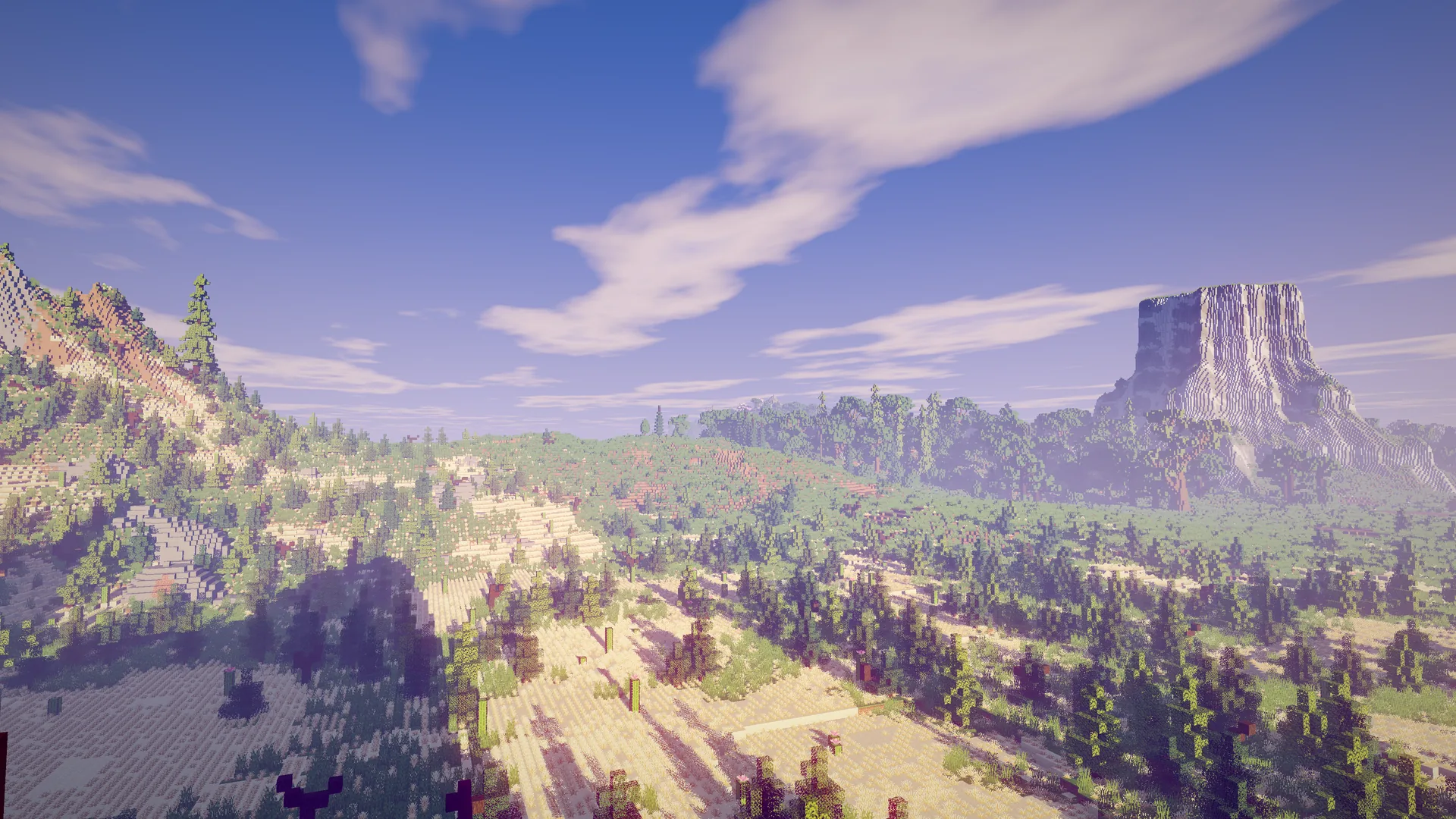
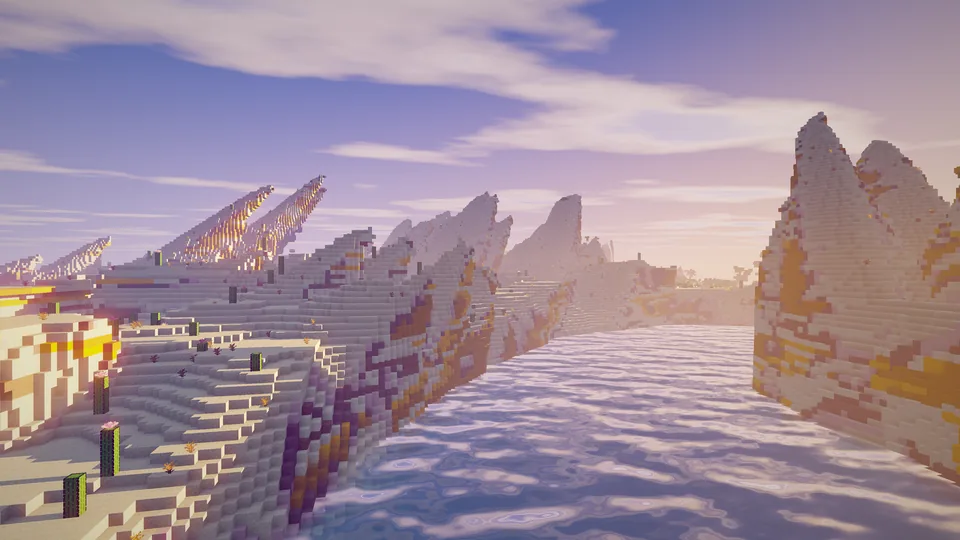
The site has been rebuilt again. The last version looked like a book. This one looks like the game, because every picture on it is the game: Solaria's own world, rendered straight from its saved terrain with the block textures you play with. No mock-ups, no stock art.
The badlands spires.
The wiki moved into the same style. Everything in it still works the way it did: search with /, link previews, sortable tables and the status label on every article.
The last dev log covered land and the feudal ladder. A lot has been built since. All of it is in the test world now and being tested by the team, so expect numbers to move before launch.
Houses
Found a House, earn Renown together and climb four Dynasty tiers. Marriages form a Kin Bond between two Houses. Children are registered, grow up in real days, and can take up their parent's mantle as the next generation. Heirlooms are bound to a House for good.
Heroes
Five classes, fifteen skill trees and sixty abilities, plus trinkets in three slots. Java players can turn on a combo mode; Bedrock fights with the same Ability Bar.
Coin, law and food
Dukes can strike their own coin at a Mint House, and coin is worth less far from home. The Auction House, chest shops, tolls and ferries are in. Crime leaves Infamy, bounties are held in escrow, and trials are judged by a jury of your peers. Food now spoils, so salting, smoking, drying and pickling matter.
Dungeons, quests and tourneys
Party dungeons with keys, modifiers and a weekly mutator; quest givers, a Notice Board and slayers' contracts; duels, jousting, a ranked arena in seasons, tournaments with prize pools, and feasts.
The Herald
The newest addition: a town crier in Aldermere. Pay in coin and your message rings out on every server, from a one-line advert to a declaration of war.
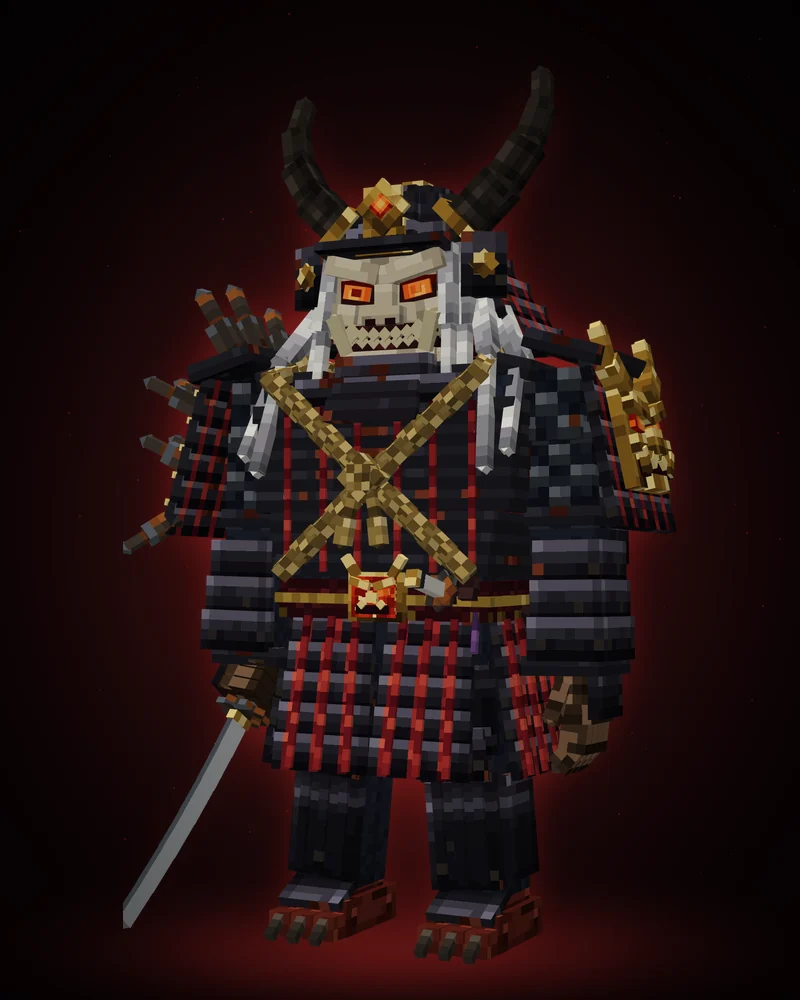
The Cinder Regent, the Gearwork Titan, Shuten and the Abyssal Warden, each with its own brood of minions. Every model, texture and animation was made for Solaria.
Shuten, the oni. His brood is the Tengu and the Onryo.
Every great blow is drawn on the ground before it lands, and you're only hit if your feet are on it when it does. Each fight turns at two thirds and one third, when the boss calls its brood. Java players see each boss's own health bar, and Bedrock players see it too. The bosses open with the dungeons.
We rebuilt the site from scratch. The old one read like a design document. This one is meant to be used.
The biggest change is the wiki. It now has 23 articles covering every system built so far, plus the lore and the world.
Search that finds sections, not just titles. Press / anywhere on the wiki to jump to it.
Link previews: hover any link to another article to see what it's about.
Sortable tables for things like regions, writ prices and development costs.
Status labels on every article, so you can tell what's built and what's still planned.
Every number on the wiki comes from the server's actual configuration. When a rule changes in the game, the article changes with it.
Still to come: the server address, the Discord, and Duchy applications going live. You can already draft your application; it saves in your browser until submissions open.
Ranks in Solaria are never handed out for playtime. They're given by players, and they come with land and obligations. This week the rest of those obligations went in.
Titles, oaths and contracts
Under each Duke there are, for now, Earls and Barons. A lord offers a title, the player accepts it, and they lead a realm of their own, which has to receive land within a week or the title lapses. Every landed vassal holds their land under a contract: 5% to 25% tax, a levy of War Hours, building rights, tenure, and whether they can sell. Changing a sworn vassal's terms needs their consent.
Loyalty
Every vassal now has a loyalty score from 0 to 100, calculated from their contract, how long they've served, and how their liege treats them. Restless vassals pay their taxes two days late. The best part is the Why? page: both sides can see exactly which terms add and take what. No hidden dice rolls.
Leagues
Three unhappy vassals can band together in a League with one demand. The liege doesn't find out until the third member joins. Once the League is as strong as its liege, it can send an ultimatum, and the liege has two days to answer.
The Council
Dukes and Earls now rule with a Council whose seats earn Influence week by week. Under the default Customary Charter, a powerful Council can veto a big tax change, and overruling it costs the Duke loyalty from everyone sitting at the table.
There's no command in Solaria that lets a stranger plant a flag. Every chunk of held land traces back to a Duke's charter, and everything after that is granted by a lord or bought one chunk at a time.
Holdings and borders
Land is held in holdings, each belonging to a realm. Walk across a border and the realm's name appears, and its edges glow for a moment so you know where you are. Inside, the lord decides who can build, who can open chests, and who can only use the doors.
Upkeep
Land costs 50 copper per chunk, every week, due Sunday evening. Leave it unpaid for a week and the holding is Neglected. Two more weeks and it's Forfeit, and the land goes back to the liege.
Plots
Lords can carve plots out of their land and rent them to anyone, with rent taken weekly from the tenant's vault. Freemen can buy a plot outright. A [plot] sign next to one lets people rent it with a click.
The Land Exchange
If their contract allows it, a vassal can sell or auction their land and title. The liege gets first refusal and has to approve the buyer, and every sale pays a 5% duty that leaves the economy for good. Lords can also spend gold to raise a holding's Development Level, which opens more plots and costs more upkeep.
Money in Solaria isn't a number floating over your head. It's a purse of coins, struck by the Aldermere Free Mint, sitting in your inventory like anything else you carry.
Three coins
100 copper make a silver, and 100 silver make a gold, so one gold coin is 10,000 copper. Gold is meant to be rare. Buying something with it should feel like a real purchase.
Coins also have weight. A light purse costs you nothing, but a heavy one slows you down, which is a good reason not to carry your savings into a dungeon.
The Bank Vault
Coins you don't want to carry go in your Bank Vault, and you can only reach it through a Banker. Deposit, withdraw, swap between metals or check your history. Deposits pay a 0.5% fee, so small amounts go in free and big hoards pay a little.
Every movement of coin is recorded. Big transfers are flagged, and very big ones are shown to staff, because an economy you can check is one you can trust.